BUILDING SCIENCE RESOURCES
Study: Assessment of an “Insulation First” Decarbonization Strategy
Canada’s transition to net zero will require homes that perform efficiently over their entire life cycle. While mechanical systems can be upgraded over time, improvements to insulation and airtightness are far more difficult and disruptive once a home is built.
This study, prepared by Building Knowledge Canada for NAIMA Canada, evaluates an “insulation first” approach to decarbonization by comparing NBC 2020 Tier 1 homes with scenarios that incorporate Tier 5 insulation and airtightness levels. Five residential archetypes were assessed in Ottawa and Edmonton to examine both operational and embodied carbon impacts.

Building Performance Video (Youtube)
This new video from NAIMA Canada explores the often unseen role insulation plays in creating more comfortable, energy efficient, and resilient homes and buildings. Developed as a broad public awareness resource, the video highlights how high-performance building envelopes contribute to durability, indoor comfort, and long-term building performance. Through an accessible approach, it helps communicate the importance of insulation as a foundational part of healthier and better performing buildings.

Building Science Glossary
The new Building Science Glossary provides clear, accessible definitions to help builders, contractors, homeowners, and students better understand how homes and buildings perform. It supports more informed decision-making by breaking down key concepts like envelope control layers, material properties, sequencing, indoor air quality, and energy efficiency. Grounded in building science, the glossary reinforces best practices that contribute to healthier, more durable, and more resilient buildings.
Building Resilience Series: Healthy Housing
This document, part of the NAIMA Canada Building Resilience series, focuses on enhancing the resilience and energy efficiency of homes and buildings. It offers insights and best practices for constructing or renovating buildings that prioritize occupant health and well-being. Specifically, it delves into building science-based strategies, emphasizing the significance of envelope control layers. The guide covers material properties, sequencing, indoor air quality, and energy conservation methods aimed at boosting occupant comfort and potentially enhancing survivability during grid outages or climate-related disasters.
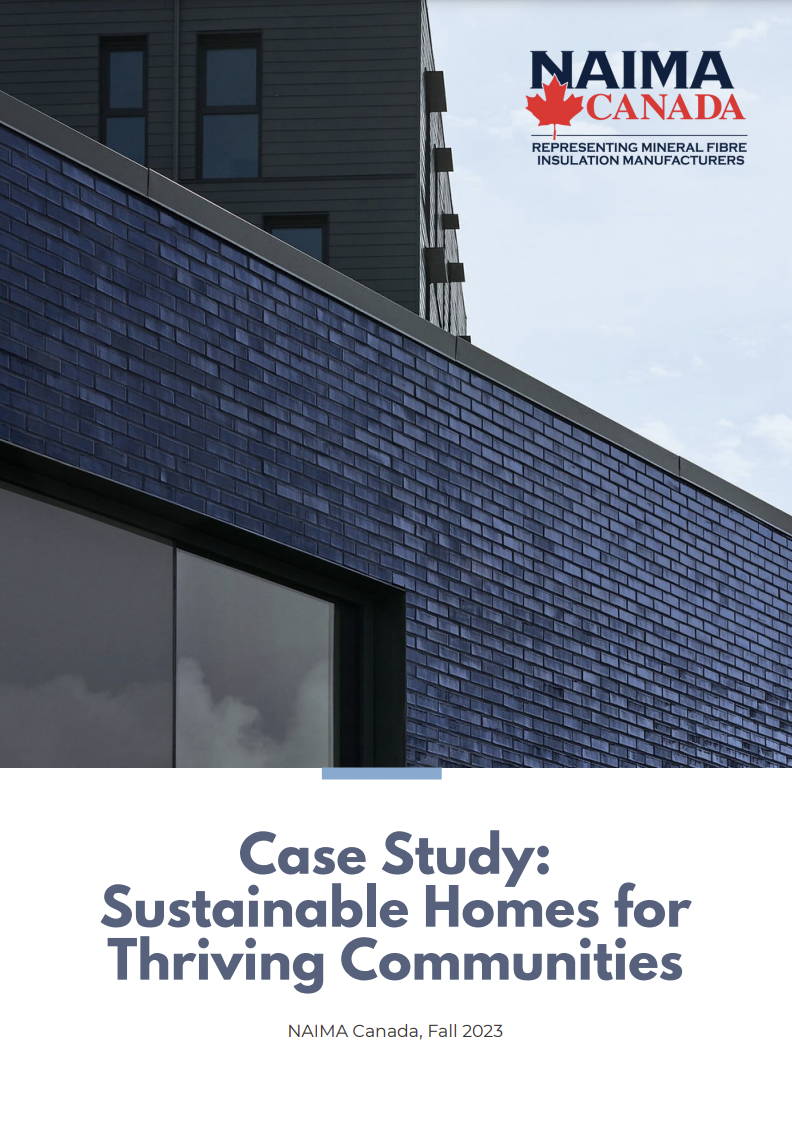
Case Study: Sustainable Homes for Thriving Communities
A case study featuring mineral wool and fiberglass insulation in a MURB in Burnaby, BC. Includes sections on Passivehouse fundamentals, benefits of PH construction, and a case study on Simon Fraser University Student Housing including building specs.
A Case for Exterior Wall Insulation when Re-siding a Home
Improving wall insulation during the siding replacement process offers significant benefits that go hand in hand with enhancing the overall energy efficiency and resiliency of our homes including a critical step towards a netzero ready building. By taking advantage of this opportune moment, we can effectively address insulation deficiencies and reduce energy consumption in a cost-effective manner.
Optimizing Retrofit Success: Getting Homes Heat Pump Ready
A comprehensive look at why heat pumps should only be retrofitted into existing houses after the building envelope has been insulated and sealed against air leakage. Prioritizing the envelope secures a more effective and sustainable retrofit process for a more efficient, comfortable home.
The Importance of the Building Envelope (English)
This document outlines the importance of the building envelope, definitions, and the whole home approach to building and renovating a home. This is a good piece on fundamentals and the whole home approach to building science.
L’Importance de L’enveloppe du bâtiment
L’enveloppe du bâtiment est l’ensemble des matériaux qui nous aident à contrôler le flux de trois éléments – la chaleur, l’air et l’humidité, et qui séparent notre environnement intérieur de l’extérieur.
The Canadian National Model Code Development System
On November 22, 2022, the National Model Code Development System was changed. This document is intended to describe the new, and current system.
Green Building Skills Training Promo
This document is designed for sharing with prospective partner organizations to effectively convey and provide insight into the mission and objectives of our training and course content.
Field Guide to the Building Envelope
NAIMA Canada’s Field Guide to the Building Envelope covers the essentials of the building envelope, its importance, how to improve the building envelope, the role of air tightness, and more.
Improving the Building Envelope
This document presented by Proskiw Engineering Ltd. will present a case for doing renovations/upgrades in a specific order so homeowners get the greatest benefit at the lowest cost.

Envelope First for 2030 Mission Statement
The mission statement and objectives for the Envelope First for 2030 Coalition. Coalition members include NAIMA Canada, SAWDAC, Fenestration Canada, and the Cement Association of Canada.
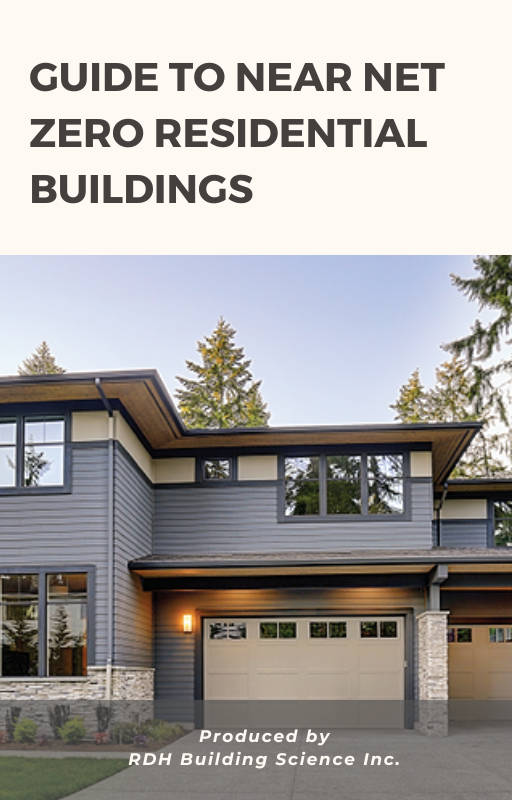
Guide to Near Net Zero Residential Buildings
This guide consolidates information on how builders and designers may achieve the near net zero energy efficiency targets in current and upcoming codes, including the British Columbia Energy Step Code. This guide is intended to be an industry resource for designing and constructing low energy use buildings using fiberglass and mineral wool insulation without compromising other aspects of building performance including moisture management, airtightness, and durability. This guide is limited to Part 9, wood-frame construction, with a focus on British Columbia, though the principles in this guide may be applied throughout Canada.
MEMBERS